Investing in Art: The Comprehensive Guide

Anyone who wants to invest in art today has a wide range of ways to do so. Art as an investment is becoming increasingly popular. In the following article we therefore want to take a closer look at art as an investment object. What options are available to investors, and what should you pay particular attention to? Here you will find everything important at a glance.
Why you can trust me as an expert on the subject of art investments
At BullionArt, years of experience with silver are combined with well-founded expertise and a passion for art. BullionArt has been active in the market for silver sculptures for more than 15 years. My sculptures combine the aesthetics of stylish works of art by selected artists with the classic investment value of silver. For this reason I am at home both as an art lover and as an investment professional.
Art as an investment: data and facts

The global art market has been extremely stable in recent decades. The pandemic did not pass the art market by without leaving a trace. However, even in the face of such a crisis, art proves to be resilient as an investment. The Art Basel and UBS Global Art Market Report 2024 comes to the following conclusion: “In 2023, global art sales fell to an estimated 65 billion US dollars, which – despite a year-on-year slowdown of 4% and while still exceeding the pre-pandemic level of 2019 – demonstrates resilience.”
Regarding the distribution of the global art market, the Art Basel and UBS Global Art Market Report 2024 makes the following observation: “The USA maintained its position as the leading market worldwide, accounting for 42% of sales by value. China became the second-largest global art market with a share of 19%, while the United Kingdom moved up to third place with a share of 17%. France remained stable in fourth place with 7% of global turnover.” The German market still accounts for a share of around 2 per cent.
The acceptance of art as an investment object has risen noticeably in recent years. According to the current Art & Finance Report by Deloitte and ArtTactic, 89 per cent of the stakeholders surveyed are in favour of “including art and collectibles in the services of wealth management firms”.
Types of art investment
Art is extremely diverse, as there are numerous forms of artistic expression. In the following we want to take a look at the most important ways of investing in art.
Painting
When people think of art, paintings usually come to mind first. Investors who want to invest in paintings can choose from works of the most diverse stylistic periods.
Sculptures
Sculptures are not just an unusual form of decoration. They also offer an interesting way to invest in art. One example is the silver art by BullionArt.
Photography
Photography is an art form that should not be underestimated. Photographs have only been recognised as art since 1972. Since then, photographic artists have enjoyed steadily growing recognition.
Digital art and NFTs
Digital art is one of the still very new forms of art. The hype around NFTs (non-fungible tokens) has made big waves in recent years. In the meantime, however, the prices of most NFTs have fallen very sharply again.
Advantages of art investments
Investing in art offers investors a number of advantages over classic investments. On the one hand, the performance of the art market correlates only very slightly with the equity or property market. Investing in art therefore allows investors to diversify their own portfolio effectively.
Another advantage is the long-term appreciation of art. In contrast to shares, art carries a lower risk of value fluctuation. A total loss is practically impossible. At the same time, many works of art can increase considerably in value over time, although of course there is no guarantee of this – as with other investments too. In any case, art is a long-term investment.
In addition, investing in art is also associated with a considerable prestige factor and offers aesthetic advantages. Art brings joy to those who look at it and enhances the spaces in which it is displayed. In order to derive as much pleasure as possible from their investment, buyers should invest in art that they personally like.
Risks and challenges
Especially for beginners, it is not easy at first to see through the art market. In many respects the art market follows its own rules and can certainly differ from the classic financial market.
A problem that should not be underestimated here is forgeries. The value of a piece of art depends on whether it really is the work of a sought-after artist. For this reason, certificates of authenticity documenting the provenance of the work are usually required when selling expensive works of art.
Furthermore, investors should be aware that works of art are among the less liquid investments. Compared to shares, it is not possible to sell works of art again at any given time without a lead time. Buying and selling art takes time. Anyone who wants to invest in art should therefore not do so merely for short-term speculation.
How to invest in art
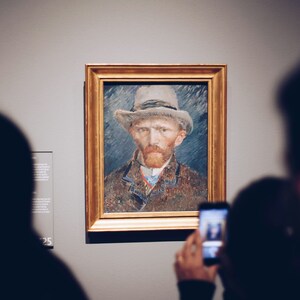
Investors who want to invest in art have various ways of doing so. The most popular ports of call include galleries, fairs and auctions. The works of well-known or up-and-coming artists are often exhibited in galleries or auctioned at art auctions. However, it should be noted that the auction houses and galleries still charge a dealer’s commission for works sold. Fees of 25 per cent and more have to be factored in here.
An alternative is buying art via online platforms. Above all, artists who are not yet established like to use online platforms to sell their works. Nowadays, the works of up-and-coming artists can likewise be acquired online. It is important that it is a reputable online dealer. BullionArt has now been active in the market for more than 15 years and offers certified sculptures in fine silver, handcrafted by well-known and up-and-coming artists.
A way of investing in art that has been becoming more popular for some time is what are known as art funds. Their mode of operation is not dissimilar to that of classic investment funds. Instead of shares or bonds, art funds invest in works of art. These are held over a certain period of time and sold towards the end of the fund’s term, with any profits distributed to the investors. Art funds are usually closed-end funds with fixed minimum investment amounts.
In addition to art funds, there are also various crowdfunding and co-ownership models. Here, several investors invest simultaneously in a particular work of art, ownership of which they then share. With such fractional ownership, however, buyers never actually get to see the works they have helped to finance. As with art funds, these are instead kept safe by the provider.
Determining the value of works of art
The value of a work of art depends on various factors. On the one hand, it naturally comes down to the name of the respective artist. The works of well-known or up-and-coming artists achieve significantly higher prices on the market than art by unknown creators. Further factors are the provenance, dating and exhibition history of a work. Rarity, condition and limited editions naturally also play a role.
Market trends are also very important. Which artists and works of art are particularly in vogue at the moment – and thus achieve high prices on the market – can fluctuate considerably over time. Recognising and correctly assessing such trends on the art market requires a longer-term engagement with the subject matter. Potential buyers should always keep an eye on expert opinions too.
The silver art offered at BullionArt consists of works that combine artistic design with the material value of silver. This creates the possibility of long-term appreciation in two respects at once.
Which tax aspects should be considered when investing in art?
Usually a work of art remains in a buyer’s possession over a longer period of time. From a tax point of view, such an approach is advantageous. Anyone who keeps art for a period of more than one year does not have to pay any tax on any profit on a subsequent sale.
If, however, works of art are sold again within the one-year speculative period after purchase, tax may be due on the profit achieved, the amount of which is based on the personal tax rate. Profits of up to 600 euros per year across all sales made within the speculative period are tax-free. Anything beyond that has to be taxed.
Investors should therefore always pay attention to the speculative period when investing in art. Please note: if a collector earns a regular income with a work of art – e.g. as a loan to a museum – the speculative period is extended to ten years.
Furthermore, investors should not sell too many works of art at once within a short period. From as few as three sales a year, there may be a suspicion of commercial trading. This could result in value added tax becoming due in addition to income tax. The same applies to the rapid purchase of works of art, because in that case the tax office could likewise assume an intention to make a profit and thus a commercial activity.
Do you have to be rich to invest in art?
Time and again, multi-million auctions by well-known auction houses such as Sotheby’s or Christie’s make headlines. However, you by no means have to be rich to be able to invest in art. Interested parties can acquire high-quality works of art for sums in the four-figure range.
The return on art investments
The return on art investments can vary greatly depending on the artist, the work of art and market conditions. Historically, returns for high-quality works of art, especially by established artists, are often in the range of 7 to 10% per year. For example, the platform ArtTrade reports historical returns of up to 9.1% per year for certain artists. Works of art by established artists and certain art genres, such as Impressionism and modern art, tend to have higher increases in value, as the Art Basel and UBS Global Art Market Report 2024 notes.
The art trading house “Fine Art Group” reports an average annual return of 14 per cent for all of its art investments, thus exceeding the average annual return of the S&P 500 of 8.9 per cent.
The Artprice 100 Blue Chip Index, which is based on the auction proceeds of the 100 best-selling artists, increased sevenfold between 2000 and early 2023. Anyone who had invested in the American S&P 500 equity index over the same period, by contrast, could not even look at a tripling of their investment.
With silver art by BullionArt, the material appreciation of silver is added to the classic increase in value of a work of art. The silver price rose by around 95 per cent between 2019 and 2024 (as of June 2024).
Successful investments in art
Investors who want to invest in art should be prepared to invest their money for the long term. One example of a long-term successful investment in art is the work of Jean-Michel Basquiat. In 2017, an untitled work by the neo-expressionist artist was sold for 110.5 million dollars. 33 years earlier, its owner had acquired it for just 20,900 dollars – an increase in value of 5,300 times. The reason for this was the steadily growing interest of investors in contemporary art.
An example in the lower price segment is the work of the pop art artist James Rizzi. Whereas a unique acrylic work with the title TODAY LOOKS LIKE A GREAT DAY TO PLAY had still been offered for just under 50,000 euros in September 2011, it found a new buyer at double the price as early as spring 2012, after Rizzi died in December. Within 5 years, the value of many Rizzi works tripled.