Inflation Protection Through Art: Why Silver Is a Stable Choice

Why inflation threatens your wealth, and which tangible assets protect it
Personal wealth is put at risk by inflation, because the rising prices that come with it noticeably reduce purchasing power. Investments without interest in particular lose considerable value, whereas tangible assets can protect investors from such losses.
What inflation means for savers in concrete terms
Inflation describes the development of prices for goods and services. The European Central Bank aims for a figure of two per cent, which Germany is currently close to reaching. In recent months the rate of price increases in this country has been between 2.0 and 2.4 per cent.
For consumers this can mean a real loss in the value of their money. With investments that carry no appreciable interest, over a period of 15 years this can lead to a loss of around 25 per cent, so that the purchasing power of €100 falls to around €75.
The widespread assumption that overnight deposits or savings accounts can offset this development is deceptive. In recent years in particular, a negative real interest rate has led to marked losses for savers. This effect arises whenever the rate of inflation exceeds the interest paid on an investment. At current overnight deposit rates averaging 1.28% to 1.75% against inflation of 2.4%, this becomes especially visible.
Tangible assets as an antidote: an overview
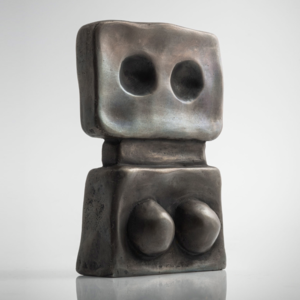
A tangible asset is a material or physical item of value. The classic examples are property, commodities, gold, silver and collectibles in the form of works of art and classic cars. These possess an intrinsic value, that is an inner value, which makes them a form of investment protected against inflation. Their particular physical properties and their financial basis make such an investment independent of current currency fluctuations and market values.
Why not all tangible assets protect equally well
Investing in tangible assets needs to be well considered, as not all of them protect to the same extent against inflation losses or market fluctuations.
Property: A property first of all requires a high initial investment and, because of its location, carries a concentration risk. It reacts sensitively to local market conditions, causes ongoing maintenance costs and offers only limited short-term availability.
Classic cars, wine and watches: These particular tangible assets can represent a stable reserve, provided extensive specialist knowledge is available. Without the corresponding expertise, however, such investments often seem less than transparent and only to a limited degree balanced.
Precious metals and art: Gold and silver have shown a consistent development in value in recent years. Both precious metals can be sold quickly and can sensibly be combined with art. The silver sculptures by BullionArt have proved to be a worthwhile investment here, as both the artistic value and the silver price have contributed to attractive returns.
Silver as inflation protection: history, stability and industrial demand
5,000 years as a store of value: silver as a historic crisis currency
Silver has always been regarded as an original means of payment, as it was used early on for the exchange of goods and later as coinage in payment transactions. Trust in this metal has become established over many centuries. This was particularly evident in 1923, when money was drastically devalued during hyperinflation.
As an enduring tangible asset, silver preserved numerous fortunes during that turbulent phase. Because of its historic role it retains a psychological advantage to this day and is recognised worldwide in times of crisis.
Industrial demand is driving the silver price
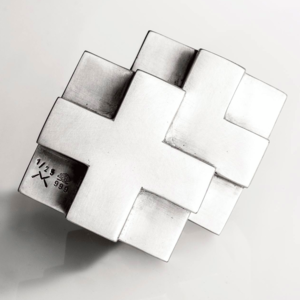
In 2025 the silver price rose almost abruptly. Strong industrial demand in the solar sector and in electric mobility, with markedly growing requirements, is regarded as the central driver of this development. As silver is also needed in smartphones, in medical technology and in further technological applications, demand remains high and experts expect prices to continue rising.
Limited reserves: why silver is becoming scarcer
Silver is one of the limited precious metals. According to estimates, only around 530,000 to 720,000 tonnes can be mined economically. At the current rate of development, extraction would realistically be possible for only about two more decades. On top of this, around 55 per cent of the known silver deposits lie in just four countries (Peru, Australia, Russia and China), which leads to a corresponding dependency.
Art as an investment: why tangible assets with emotional value are particularly crisis-proof
Art outperforms classic investments
Art can in many cases be very well suited as a form of investment. With renowned artists, returns of around 7.8 per cent have been observed, which was in some cases above the performance of the DAX or the S&P 500. Many wealth managers therefore take the view that art should be a fixed component of a balanced portfolio. It has a stabilising effect and develops largely independently of the equity markets.
The “emotional dividend” – enjoying art and hedging at the same time
The emotional value of art should on no account be underestimated. It has a strong aesthetic appeal and brings pleasure even in phases of falling prices. At the same time, the works acquired stand for a gain in prestige and can be made accessible to the public, for instance through collections. Because of its cultural significance, art can prove to be a valuable investment even in difficult times.
The synthesis: silver art combines the stability of precious metal with artistic appreciation
Two value drivers in a single object
Silver art as a form of investment rests on two central factors. The pure material value of the silver forms a stable basis, while the artistic value can rise considerably as the creators grow in popularity. The balanced interplay of both aspects provides a twofold safeguard.
Why this combination is rarely offered
I have found that the combination of silver and art is only rarely perceived as a form of investment. Traditional precious metals dealers mostly concentrate on coins or bars, while galleries in the art trade frequently take hardly any account of the material value. The silver sculptures by BullionArt, by contrast, combine the value of the silver with artistic ambition and thereby create an attractive opportunity for investment.
Silver sculptures vs. bars and coins: the advantages in direct comparison
Aesthetics and function: the sculpture as an object for the home
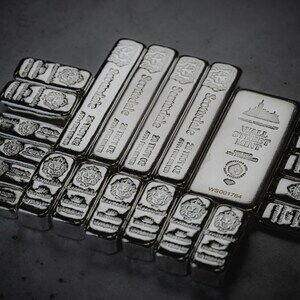
A silver sculpture by BullionArt is distinguished by a high aesthetic ambition and enriches any interior scheme. As a decorative object it is clearly visible and creates inspiring impressions for viewers and owners alike. An emotional bond with the work of art often forms quickly, which contributes to a long holding period. Coins and bars, by contrast, lie hidden in the safe and bring no emotional value with them.
Discretion and security: the “camouflage effect”
To the surprise of many owners, a fine silver sculpture goes undetected in burglaries, because it does not embody any obvious value in the way a gold bar does. This apparent camouflage effect results from a lack of understanding of art. In addition, unlike storing precious metals, displaying a sculpture involves no additional costs.
Silver art by BullionArt: fine silver sculptures by renowned artists
The concept: timeless art meets precious metal
The BullionArt concept has proved to be exceptionally successful. In 20 years on the market, the consistent use of fine silver with a purity of 999 and the certification of the works through proof of authenticity have been important factors in building the brand. It combines the demands of a solid investment with the value of high-quality art in a convincing way.
The artists in the portfolio
A further factor in this success was the careful selection of the artists. Over time they have built up a recognised reputation, among them Susanne Kraißer, Tilmann Krumrey, Pierre-Paul Maillé, Maximilian Verhas and Kuno Vollet. The various stylistic directions – from figurative motifs such as animals and people through abstract forms and geometric elements to modern design – have aroused great interest among art lovers. The deliberate limitation of the works also increased their rarity and contributed substantially to a long-term increase in value.
The gold-silver ratio: why silver is currently undervalued
What the gold-silver ratio tells us
The gold-silver ratio indicates how many ounces of silver correspond to the value of one ounce of gold. Historically this figure mostly moved between 12 to 1 and 50 to 1. In pronounced times of crisis, such as during the Great Depression of the 1930s, exceptionally high figures of over 100 and up to 132 were reached. At present the ratio stands at around 80 to 1. Silver is thus considerably cheaper than gold, yet after crises of this kind it frequently shows a particularly strong catching-up movement.
Historical patterns: silver overtakes gold in upward phases
Silver shows remarkable behaviour especially in the years after crises. In the 1970s, after the financial crisis of 2008 and also after the coronavirus phase in 2020, silver recorded markedly stronger gains in value than gold. As a form of investment it is therefore often regarded as “the poor man’s gold”, which through a pronounced leverage effect can lead to high returns.
Forecasts: where is the silver price heading?
High industrial demand and the supply deficit on the market have recently proved to be drivers of the increase in the value of silver. Experts expect a ten-year high for silver and assume a positive environment for the metal over the long term.